Cardioversion: background, preparation and procedure
Ahmed Raza
 Reviewed by Lorraine Anne Liu, RN, a registered nurse and cum laude graduate with experience in OR, ICU, delivery room, and OPD. She specializes in pediatric care and primary health care nursing and is certified in BLS, IV therapy, and cardiac assessment.
Changes: Clarified the preprocedure and recovery instructions
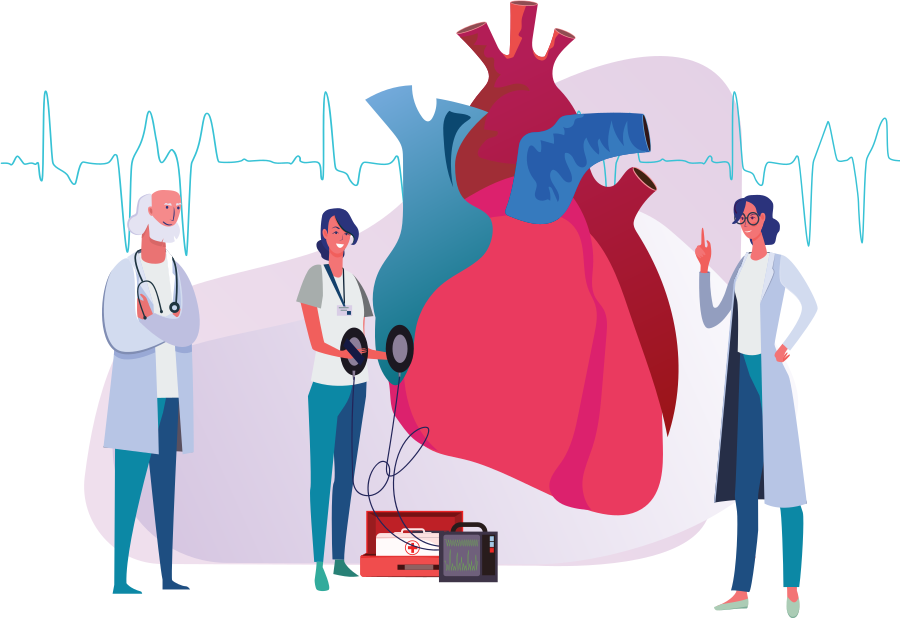
Cardioversion (delivery of a synchronized shock) is a medical procedure that helps to restore a normal heart rhythm in people with various types of arrhythmias (i.e., abnormal heartbeats). In cardioversion, electrodes are placed on the patient’s chest to send electric shocks to the heart. Cardioversion can also be performed with certain medications. Usually, cardioversion is a scheduled procedure that is performed in a hospital. After the procedure is performed the patient can return home on the same day. For many patients, cardioversion restores a normal heart rhythm promptly.
Cardioversion is usually used to treat atrial fibrillation or atrial flutter. These conditions occur when electrical signals do not travel properly through the upper chambers of the heart and prevent a regular rhythm. Cardioversion lets medical teams confirm immediately whether sinus rhythm has been restored. Electrical cardioversion takes less time than cardioversion performed solely with medications. The treating clinician determines whether the patient will receive medications, electrical cardioversion, or both1.
Cardioversion is referred to as defibrillation when it is performed in an emergency condition to prevent death due to cardiac arrest caused by potentially fatal ventricular arrhythmias. If atrial fibrillation remains untreated it can increase the risk of heart failure and stroke2.
Background
Heart muscle contracts because of electrical impulses. Normally each impulse travels in an ordered pattern from the atria to the ventricles, producing a heartbeat. Any change in these nerve impulses can lead to an abnormal heart rhythm.
Preparing for cardioversion
Normally, doctors advise patients not to eat or drink for 8 hours before the procedure. If the patient takes medication before the procedure, they should drink only enough water to swallow the pill. If the patient does not take any medication, the doctor will tell them whether they need any before the procedure.
Sometimes, before cardioversion, a transesophageal echocardiogram is performed to check for blood clots in the heart. Because blood clots can break away and cause life-threatening complications, the medical professional decides whether the patient needs this procedure.
If a transesophageal echo (TEE) test reveals blood clots in the heart, cardioversion will be delayed for three or four weeks. During that time, the patient will take blood-thinning medications to reduce the risk of complications1.
During cardioversion
- Patients are given medications through an IV to make them sleep during the procedure so they do not feel pain from the shocks. Other medications may also be given intravenously to help restore the patient’s normal heart rhythm.
- Several large patches called electrodes are placed on the patient’s chest. The electrodes are attached to the defibrillator (cardioversion machine) with the help of wires. The machine detects your heart rhythm and delivers a shock to bring your heart rhythm back to normal. This machine also corrects the heart rhythm if it beats too slowly even after cardioversion. Once the patient is sedated, electric cardioversion takes only a few minutes to complete.
After cardioversion
Cardioversion is done on an outpatient basis, which means that the patient can return home on the same day. The patient spends an hour or so in the recovery room, where medical staff monitor them for complications.
The patient needs someone to drive them home because the procedure can affect their decision-making ability for a few hours.
Even if no clots are found in the patient’s heart, blood-thinning medications are given to the patient for at least some weeks after cardioversion is performed to avoid the formation of new clots.
Risks of cardioversion
Risks associated with cardioversion are:
- If the patient has atrial fibrillation, then there are chances of blood clots forming in the heart. Cardioversion can set the clot free and if the clot (embolus) travels to the brain it can cause a stroke.
- If electrical cardioversion is performed on the patient, the skin where the electrodes were applied (i.e., chest or back) may become irritated. The doctor will prescribe any cream to make the skin of the patient feel better.
- Cardioversion does not always bring normal heart rhythms back. In such a case the patient is given medications, an implantable cardioverter-defibrillator (ICD), or a pacemaker2
Conclusion
Cardioversion is the delivery of a synchronized shock (i.e., synchronized cardioversion) to restore a normal heartbeat. The procedure takes a few minutes after the patient is sedated. Medications can also be used to restore a normal heart rhythm. For electrical cardioversion, electrodes deliver electric shocks to the heart. In either case, the patient can return home the same day. Cardioversion can sometimes worsen arrhythmias and cause life-threatening complications.
Reference
Did you get it?
Stay on track!
Would you like a reminder when your ACLS certification expires, plus study tips?
How we reviewed this article
Our experts continually monitor the medical science space, and we update our articles when new information becomes available.
- Current versionMail the author of this pageEmail
- Nov 9, 2026
Copy edited by:
Copy editorsChanges: Clarified the preprocedure and recovery instructions- Sep 15, 2020
Reviewed by:
Lorraine Anne Liu, RNa registered nurse and cum laude graduate with experience in OR, ICU, delivery room, and OPD. She specializes in pediatric care and primary health care nursing and is certified in BLS, IV therapy, and cardiac assessment.