Cardiac disease in the young
Ahmed Raza
 Written by Amanda Menard, LPN, a practical nurse since 2005 with experience in ICU, cardiac care, and case management. She is pursuing her MSN for Family Nurse Practitioner and is a former Military Medic with the Louisiana National Guard.
 Reviewed by Judy Haluka
Changes: Reviewed and updated sections on Eisenmenger syndrome shunting, pump failure, and sudden cardiac death in young athletes
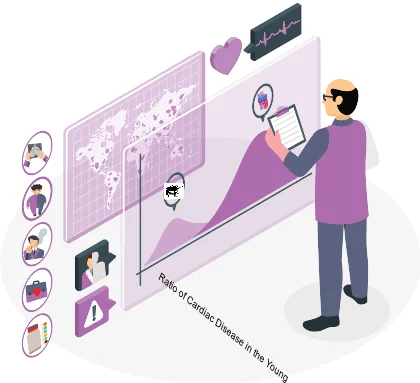
Cardiovascular disease (CVD) is an umbrella term used for all conditions that affect the heart and blood vessels. CVD is often perceived as a problem strictly for the older population. However, it is more common in adolescents and young adults than most people realize — it can affect anyone, at any age. The younger population is often unaware that they may be at risk and may fail to take the appropriate actions that could save their lives. Educating parents, adolescents, and young adults about the different risk factors is the best way to help prevent death and reduce problems associated with cardiac disease. In particular, childhood obesity has quickly become a global epidemic where 1 in 10 children are estimated to be overweight. Obesity can lead to precursors for CVD such as dyslipidemia (high cholesterol), hypertension (high blood pressure), type-2 diabetes, and metabolic syndrome. If these conditions are left unchecked, premature cardiovascular disease can occur, leading to significant health problems in young adults. Additionally, cardiac disease in the young can also be caused by undiagnosed or untreated congenital heart defects and abnormalities.
Warning signs
Cardiac disease in the young is often unexpected, so warning signs are not always recognized. The general warning signs in adults include;
- breathlessness
- fatigue
- chest pain
- weakness
- edema
They may also experience pain in the
- left arm
- jaw
- back
- neck
- shoulder blades
- epigastric region (upper central region of the abdomen)
Women often experience slightly different warning signs. As opposed to heart pain, they may feel squeezing or tightness in the chest. Sometimes, they do not feel chest pressure at all, and instead, will feel short of breath, upper back pressure, or upper abdominal pain. They may also experience excessive fatigue, cold sweats, dizziness, nausea, vomiting, and sometimes fainting. Heart disease is the No.1 killer of women in the U.S. This is often due to women mistaking their symptoms for other conditions such as a stomach bug, the flu, or indigestion.
For children and adolescents, signs and symptoms may not be as obvious. Dissimilar to adult cases, chest pain is rarely indicative of cardiac disease in children. However, a physician should be notified if chest pain does occur with strenuous activity such as exercise. Symptoms in children and adolescents may include;
- The inability to physically keep up with others of the same age
- Becoming out of breath much sooner than others of the same age
- Turning blue around the gums or tongue
- Dizziness with physical exertion
- Heart palpitations
- In some cases, fainting (syncope)
If a child displays any of these symptoms, it is always important to notify their primary care physician as soon as possible.
- Early warning signs — Seven early warning signs of a heart attack. Includes statistical information, top clues and factors, and what to do.
- Heart disease: It can happen at any age — CDC article about knowing the signs of heart attack in young adults. It states that heart disease can occur at any age.
- Symptoms of heart problems in children — SCAI article on symptoms of heart problems in babies, children, older children, and adolescents.
Myths that young people do not get heart disease
There are many misconceptions and myths associated with heart disease. Some people believe that children and young adults do not have to worry about heart disease because they are too young to develop these issues. This is simply untrue as heart health issues, and even a heart attack, can occur at any age. People can begin to develop plaques (atherosclerosis) in their arteries during childhood, and this has only been aggravated with the rise in childhood obesity. In the U.S. alone, the number of overweight children has doubled, and the number of overweight adolescents has tripled since 1980.
- 7 most common heart disease myths — The British Heart Foundation article on 7 common CVD myths.
- Heart disease fact sheet — CDC heart disease fact sheet. Provides statistical data, disease facts, risk factors, and additional resource information.
Cardiovascular conditions found in children and adolescents
There are times when cardiovascular disease in the young is not caused by any precursors for CVD or an unhealthy lifestyle. In these situations, undiagnosed congenital heart defects, abnormalities, or an infection tend to be the culprit. Any of these situations can lead to *overcirculation failure* or *pump failure* of the heart. Overcirculation failure is usually caused by a structural defect in the heart that causes oxygenated and deoxygenated blood to mix. Because the normal flow of blood is interrupted, the heart beats inefficiently causing heart failure. Eisenmenger syndrome is one example of overcirculation failure found in adolescents and young adults where, if left untreated, it can result in blood clots, stroke or kidney failure. This syndrome is characterized by a collection of symptoms that include cyanosis (blue or grayish skin), pulmonary hypertension (high pressure in the arteries of the lungs), and erythrocytosis (increased number of red blood cells due to an inadequate supply of oxygen in the blood) caused by a congenital defect where blood initially shunts from the left side to the right side of the heart and, over time due to pulmonary hypertension, can reverse direction (right-to-left shunt).
Common congenital defects include;
- Atrial septal defect
- Tetralogy of fallot
- Ventricular septal defect
- Coarctation of the aorta
- Transposition of the great arteries
Pump failure can result from structural abnormalities of the coronary arteries or heart valves present at birth, infections that damage the heart muscle, or disorders of the heart’s electrical conduction system. In these cases, the heart is unable to pump blood effectively, which can lead to heart failure. Examples of conditions that may involve infectious or post-infectious cardiac damage include Kawasaki disease and rheumatic heart disease. Rheumatic heart disease is a long-term complication of rheumatic fever, which develops after an untreated or undertreated Group A streptococcal (strep throat) infection. Kawasaki disease has an unknown cause, though it is thought to involve an abnormal immune response, possibly triggered by an infectious agent.
- Types of heart disease observed in children and adolescents — World Heart Federation article on heart diseases found in children and adolescents.
- Types of heart disease in children — Healthline article on some of the different types of heart diseases found in children.
Young women and heart disease
Heart disease is the leading cause of death in women in the US, taking more lives than lung and breast cancer combined. It affects women of all ages including women who are below the age of forty. The risk of cardiovascular issues in young women is elevated when there is a history of heart problems in the family. Certain conditions such as familial hypercholesterolemia (FH) can lead to heart disease at an early age. This condition causes a buildup of low-density lipoprotein (LDL) cholesterol in the walls of arteries and can lead to heart attack. The risk may also be increased by as much as 20 percent in women who smoke while using oral contraception. Also, women with diabetes have almost double the risk of cardiovascular disease than those without. Coupled with the rise in obesity, these conditions can lead to an increased risk of premature death due to stroke, coronary artery disease, and hypertension.
- Heart disease statistics at a glance — AHA Go Red for Women heart disease statistics. Includes general overall statistics on women, Hispanic women, and African-American women.
- Women and heart disease fact sheet — CDC fact sheet on cardiovascular disease in women.
Cardiac disease in young athletes
Young people who are victims of sudden death often have an underlying cardiac disease that has gone undiagnosed. Athletes are typically at risk because of the continuously increased workload on the heart during physical activities. An athlete is often thought of as an individual who is in good physical health, however, when it comes to cardiac disease, athletes are often taken unawares. One form of heart disease that affects athletes 30 years or younger is hypertrophic cardiomyopathy (HCM) which is the most common cause of sudden death in young athletes. Athletes with this condition have a left ventricular wall thickness that is unusually thicker than normal. In this case, the heart’s electrical conduction system can be disrupted resulting in an irregular heartbeat (arrhythmia) that can cause cardiac arrest.
Other less common causes of cardiac disease in athletes are:
- Myocarditis
- Marfan’s syndrome
- Dilated cardiomyopathy
- Congenital coronary artery anomalies
- Right ventricular dysplasia
- Mitral valve prolapse
- QT-Interval prolongation syndromes
The idea that young trained athletes can experience sudden cardiac death is often unexpected. In the United States, basketball and football are among the sports most frequently associated with sudden cardiac death in athletes, though the proportion of total cases varies by study. Worldwide, soccer is also commonly reported in sudden cardiac death cases due to its high participation rates. Sudden cardiac death in athletes occurs more often in males and is estimated to affect approximately 1 in 50,000 to 1 in 100,000 athletes per year. Careful pre-participation cardiovascular screening of young athletes can help identify underlying and undiagnosed cardiac conditions and may reduce the risk of sudden death during sports participation.
- Cardiac disease in young trained athletes — Article by Circulation Journal on insights into methods for distinguishing athlete’s heart from structural heart disease.
- Sudden death in young people — Informational article by the Mayo Clinic on common heart problems that cause sudden death in the young, their causes, symptoms, prevention, and risk factors.
- Sudden death in athletes — Cardiologist written article explaining sudden cardiac death in athletes, risks, screening, signs and symptoms of CVD, and current AHA recommendations.
Risk factors for young people
Modifiable risk factors are those that can be successfully treated or controlled over time. While there are several modifiable risk factors associated with cardiovascular disease in the young, the most common are smoking and drug use, high blood pressure (hypertension), and elevated LDL cholesterol. Hypertension alone is a risk factor that causes 13% of deaths worldwide. A sedentary lifestyle, alcohol abuse, and unhealthy eating also contribute to these risk factors. Additionally, a family history of cardiovascular disease is a non-modifiable factor that can increase the risk of developing heart disease.
Obesity is frequently a causative factor for hyperlipidemia (high cholesterol), hypertension, and type-2 diabetes. While obesity can be detrimental to adult health, childhood obesity carries with it a higher chance of these risk factors becoming more severe as an adult thereby increasing their odds of developing cardiovascular disease. Healthier eating habits, reducing sedentary time, and staying active can significantly reduce the odds of developing CVD or any of its risk factors.
- Risk factors for heart disease likely decrease brain function too — Informational article on a cognitive function study that indicates brain function in adults as young as 35 may decline in correlation to an increase in cardiac risk factors.
- Cardiovascular disease risk factors — World Heart Federation listing of modifiable and non-modifiable cardiac disease risk factors.
- Children already living with adult heart disease; What are the risk factors and how can we prevent them — Informational article on cardiac disease in children, associated conditions, and advice on prevention and controlling of risk factors.
- NHLBI: Risk factors — Listing of risk factors for those who are overweight or obese.
- Childhood obesity causes & consequences — Information from the CDC on childhood causes of obesity, immediate health risks, and future health risks.
We offer an online ACLS certification/recertification which you can complete and get certification for your workplace. Click here to sign up or get more information
Did you get it?
Stay on track!
Would you like a reminder when your ACLS certification expires, plus study tips?
How we reviewed this article
Our experts continually monitor the medical science space, and we update our articles when new information becomes available.
- Current versionMail the author of this pageEmail
- Apr 21, 2026
Reviewed by:
Changes: Reviewed and updated sections on Eisenmenger syndrome shunting, pump failure, and sudden cardiac death in young athletes- Apr 17, 2016
Written by:
Amanda Menard, LPNa practical nurse since 2005 with experience in ICU, cardiac care, and case management. She is pursuing her MSN for Family Nurse Practitioner and is a former Military Medic with the Louisiana National Guard.