Heart disease: angina pectoris

 Reviewed by Caitlin Goodwin DNP, CNM, RN
Changes: Medical review and content updates
When the heart does not receive sufficient oxygen-rich blood flowing through it, discomfort and chest pain result. This chest pain is called “angina.” Some people describe angina as pressure or a tight chest squeeze. Angina is not a disease. Rather, angina is a symptom of other heart issues, such as coronary heart disease.
“Chest pain” by Sinclair.Sharon28 is licensed under CC BY 2.0
Different types of angina
Several types of angina exist, including stable angina, unstable angina, variant (Prinzmetal’s) angina, microvascular angina, and atypical angina. Different types of angina have different symptoms and different triggers that cause the symptoms.
Stable angina
Stable angina describes angina pectoris. This type of angina occurs in connection with coronary heart disease when the heart is deprived of sufficient amounts of blood. This situation typically occurs due to narrowing or blockages of coronary arteries. Blocked arteries may enable sufficient blood flow to the heart during periods of rest or light physical exertion. However, when the heart must pump faster to keep up with more physical exertion, the narrowed arteries will not allow enough blood to flow through them, and angina will occur.
Unstable angina
Unstable angina may also be called “acute coronary syndrome.” With unstable angina, chest pain occurs unexpectedly, even at rest. Atherosclerosis, fatty buildup in coronary arteries, may lead to a rupture. This could completely block blood flow to the heart. Unstable angina is an emergency situation that could lead to a heart attack.
Variant angina (Prinzmetal’s angina)
Variant or Prinzmetal’s angina is an uncommon type of angina, typically occurring in younger people. Variant angina usually happens while a person is sleeping during the overnight hours. This type of angina is exceedingly painful, and it occurs from a spasm of the coronary arteries.
Microvascular angina
Microvascular angina is often associated with coronary microvascular disease. This type of heart disease involves the smallest coronary artery blood vessels of the heart. When these tiny arterial blood vessels spasm, the flow of blood to the heart becomes restricted. This restriction causes angina symptoms.
Atypical angina
Some people experience angina that does not fit the normal symptom parameters. This type of angina is called atypical angina. Women usually experience atypical angina more than men do. Atypical angina symptoms include:
- an indistinct discomfort in the chest,
- nausea
- fatigue
- indigestion
- shortness of breath
- pain in the neck and back
What are the symptoms of angina?
Angina typically involves a group of symptoms centering on the heart in the upper body. If pain or pressure in the chest lasts more than a moment or two and does not subside with rest, get medical assistance immediately. Medical intervention, including CPR, can limit permanent damage from a heart attack. Anyone can perform CPR and restore blood flow to the heart muscle in the event of a heart attack.
The symptoms include
- Sharp or indistinct chest pain
- Pain in the shoulders, arms, neck, or jaw
- Sweating
- Nausea
- Restlessness
- Chest pressure
- Burning or nagging indigestion
- Shortness of breath
- Fatigue
- Dizziness
Learn more about symptoms and management of angina pectoris by our AHA ACLS renewal online.
Aggravating factors for angina pectoris
There are certain things that increase your risk of angina, particularly if your vessels are already blocked. Some of these situations that aggravate angina pectoris include:
- Physical activity
- Extreme heat or cold
- Emotional stress
- Large or rich meals
- Drinking too much alcohol
- Cigarette smoking
Diagnosis of angina pectoris
- Electrocardiogram (EKG): An EKG records the electric rhythm of the heart, to evaluate any abnormal rhythms or damaged muscle.
- Stress test: The test checks your heart’s ability to tolerate stress, like exercise. The heart can be evaluated by:
- EKG and treadmill
- Nuclear perfusion with a radioactive tracer detected by nuclear camera.
- Stress echocardiogram with an EKG and ultrasound of the heart.
- Cardiac catheterization: A wire is passed into the coronary arteries and a contrast dye is injected into your artery. X-rays are taken to evaluate the vessels for narrowing, blockage, or any other signs of coronary artery disease.
- Cardiac MRI or CT scan: A test to look at blood flow to the heart, and possibly calcium and plaque build-up.
Angina increases the risk of a cardiovascular event, like a heart attack. Angina pectoris means that your heart is not getting enough oxygen. Familiarizing yourself with basic life support (BLS) for cardiopulmonary resuscitation (CPR) can save lives.
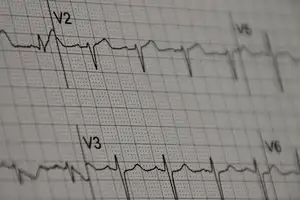
“EKG” by mgstanton is licensed under CC BY-NC-ND 2.0
Treatment of angina pectoris
Treatment depends on your overall health and the severity of the pain. The goal is usually to treat it with a medication that improves blood flow to the heart.
The most common medication for angina is nitroglycerin, which is taken up to three times following the start of chest pain but cannot be taken in conjunction with erectile dysfunction medications.
Other medications also treat angina, like:
- Beta-blockers: A drug that blocks a hormone that increases heart rate and blood pressure and relaxes the blood flow to improve blood flow.
- Calcium channel blockers: A medication that helps to open coronary arteries.
Angina pectoris resources
- Angina overview this web page presents information about angina symptoms, diagnosis, risk factors, and treatment.
- Angina pectoris explore the different types of coronary artery disease and the classification of angina pectoris on this web page.
- Angina/angina pectoris read a basic explanation of angina pectoris on this web page, including descriptions of the pain commonly experienced by people.
- Chest pain of angina can be a symptom of coronary artery disease this web page presents comprehensive information about angina pectoris.
- What is angina pectoris view a video or read a transcript that explains the causes of angina pectoris.
- Angina pectoris treatment management the main goals of treatment in angina pectoris are to relieve the symptoms, slow the progression of the disease, and reduce the possibility of future events, especially MI and premature death.
- Angina overview Cedars-Sinai presents information about angina, including symptoms, diagnosis, and treatment options.
- Angina pectoris learn the difference between angina and a heart attack on this web page.
- Signs and symptoms of coronary heart disease this web page presents an overview of coronary heart disease, explaining angina as the most frequent symptom of coronary heart disease.
- Medication vs. stents for heart disease treatment explore different treatment options for patients with stable angina on this web page.
- Exercise prescription heart disease learn about heart disease and how exercise can be beneficial for these patients on this web page.
- Exercise for patients with coronary artery disease this report explains angina pectoris and how exercise can improve the health of patients.
In order to get details about heart diseases and angina pectoris checkout our ACLS certification and ACLS online recertification courses.
Did you get it?
Stay on track!
Would you like a reminder when your ACLS certification expires, plus study tips?
How we reviewed this article
Our experts continually monitor the medical science space, and we update our articles when new information becomes available.
- Current versionMail the author of this pageEmail
- Nov 4, 2021
Copy edited by:
Copy editorsChanges: Medical review and content updates- Oct 27, 2021
Reviewed by: